
Success Is Built on Discipline, Not Motivation
선배 수험생의 대입 경험
We asked students who have gone through the college application process about their college application experiences. Below are the common questions.
1. When and how did you start preparing for college applications?
2. How did you build your college list? What factors did you consider?
3. What was the most challenging part of completing your application, and how did you overcome it?
4. How did you approach requesting letters of recommendation?
5. How did you choose your essay topic, and what advice would you give for writing a strong personal statement?
6. What extracurricular or academic experiences made a significant difference?
7. How did you manage your time between academics and extracurricular activities?
8. If you could go back, is there anything you would do differently?
9. Besides grades, what is most important in making the most out of high school?
10. In what ways have you grown the most throughout high school?
11. How did you stay motivated during times of doubt or low confidence?
12. What is one piece of advice you would give to underclassmen?
정리 = 김소영 게이트웨이 아카데미 원장
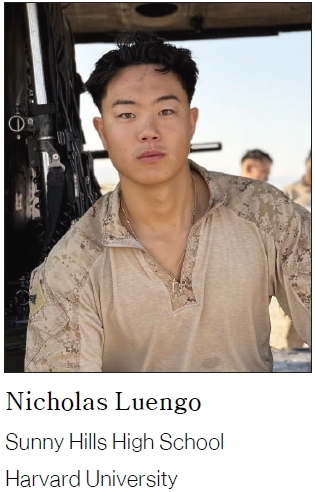
Success Is Built on Discipline, Not Motivation
1. I started by building discipline and direction before I ever focused on applications. My time in the Marine Corps gave me a clearer sense of purpose and forced me to think long term. When I formally started preparing, I focused on reflecting on my experiences and connecting them to where I am headed.
2. I built my list around fit and opportunity. I looked for schools with strong academics but also environments that push you to think bigger. I was especially interested in places with strong networks and access to industries like startups and defense tech. I also wanted a culture that values leadership and accountability, which is something I developed heavily in the Marine Corps.
3. The hardest part was translating my experiences into something clear and relatable. A lot of what I have done involved responsibility and pressure, but I had to explain not just what I did but how it changed the way I think. I overcame it by focusing on reflection and making sure each experience showed growth.
4. I chose people who had seen me perform under pressure and grow over time. That included leaders who could speak to my accountability and consistency. I approached them respectfully and gave them context about my goals so they could write something personal and meaningful.
5. I chose a topic that showed growth and perspective. I focused on how taking on real responsibility at a young age shaped the way I think and approach challenges. My advice is to be honest and specific. Do not try to impress. Focus on showing how your experiences actually changed you.
6. Experiences where I had real responsibility made the biggest difference. Managing financial operations, solving problems, and being trusted with important decisions showed that I could operate in high stakes environments and follow through.
7. I focused on prioritization and structure. Learning how to manage time became even more important once I took on more responsibility after high school. I carried that mindset back into everything I do, focusing on doing a few things well instead of trying to do everything.
8. I would take more risks earlier, especially in putting myself in uncomfortable situations. A lot of the growth I experienced later came from being pushed outside my comfort zone, and I would have leaned into that sooner.
9. Developing discipline and self awareness. Those are the traits that carry over into everything else. Grades matter, but your habits and mindset determine how far you actually go.
10. I have grown the most in accountability and composure. Taking on real responsibility, especially in the Marine Corps, taught me how to stay steady under pressure and take ownership of outcomes.
11. I learned to rely on discipline instead of motivation. There were times when confidence was not there, but I kept showing up and doing the work. That consistency builds confidence over time.
12. Focus on building discipline and taking on real responsibility early. Do not just build a resume. Build habits, character, and the ability to handle pressure. That foundation will separate you later on.
Nicholas Luengo / Sunny Hills High School·Harvard University